Iran and Turkey are killing protesters in Iraq and Syria
Beginning in October, Iraqis took to the streets of Baghdad and other cities across the south to protest rampant government corruption. This is not the first time such protests have taken place. Since the summer of 2015, Iraqis have intermittently taken to the streets to condemn government ineptitude.
While past protests have seen moments of violence, the present protests were immediately met with an unprecedented level of brute force before they even got off the ground.
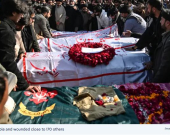
Had those initial protests not been met so quickly with such violence, they would arguably not have spread and gained so much momentum in such a short time frame. Snipers indiscriminately targeted protesters. More than 300 Iraqis have been killed and almost 15,000 wounded in the violence following the crackdown.
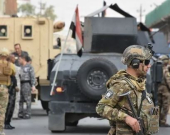
These snipers were deployed by Iran-backed factions within Iraq’s Shiite-majority Hashd al-Shaabi, or Popular Mobilization Forces (PMF), paramilitaries.
“It is the Iranian leadership, and more especially General Qasem Soleimani, the commander of Revolutionary Guard’s al-Quds force and supremo of Iranian regional policy, who is orchestrating the campaign to smash the protests by sustained use of violence,” wrote journalist Patrick Cockburn.
Iran controls several powerful factions within the PMF. Hadi al-Amiri, head of the Badr Organization, for example, is well known for his loyalty to Tehran and its interests in Iraq. Such Hashd factions were likely behind the armed raids on television stations in Baghdad in early October, which was a clear attempt at muzzling press coverage of the protests and the accompanying murder of civilians.
“It is unlikely that this was a pre-arranged plot by the pro-Iranian paramilitaries acting on their own initiative,” Cockburn added. He also pointed out that, “the speed and cohesion with which those pro-Iranian Shia paramilitary groups reacted – or overreacted – to the protests suggests a detailed contingency plan.”
Through these proxies, Tehran has used disproportionate force and indiscriminate violence in an attempt to intimidate Iraqis and prevent them from protesting the rampant corruption that has plagued their country for years now.
Despite evidence this was the case, Iran is yet to face any serious scrutiny by the international community for its actions. This is not all that surprising considering the fact Tehran has already got away with decisively supporting the Syrian regime of Bashar al-Assad, which has committed numerous war crimes and crimes against humanity throughout the past decade.
Shortly after the protests began in Iraq, Turkey launched another major cross-border incursion into Syria against the Kurdish-led Syrian Democratic Forces (SDF) paramilitary. While Ankara claims it only targeted ‘terrorists’ in this campaign, it has in recent weeks overseen numerous abuses against civilians.
In this campaign, Turkey is backing a fighting force of Syrian militiamen proxies – often referred to as the Turkish-backed Free Syrian Army (TFSA) or the Syrian National Army (SNA).
These groups have looted civilian homes and businesses in areas they have captured, as they did when they previously invaded the Kurdish enclave of Afrin in early 2018. The incursion also displaced at least 180,000 civilians from their homes and killed at least 92 people. US surveillance drones have observed what appeared to be the deliberate targeting of civilians by the TFSA.
The Turkish Army has also been directly responsible for civilian deaths. Following the American withdrawal from the border, Turkey and Russia reached an agreement to jointly patrol the border areas from which the SDF was compelled to withdraw.
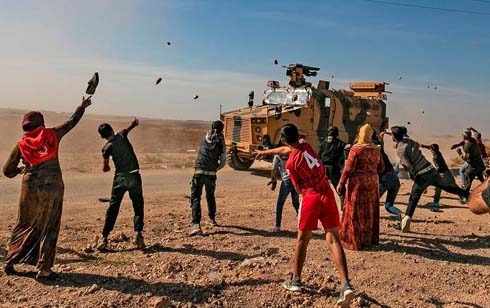
To date, both countries have carried out seven joint patrols. Residents have thrown rocks at the Turkish Army’s armored vehicles driving through their towns and villages.
There have been no documented cases of attempts to target these vehicles with machine guns or rocket-propelled grenades or other such weapons. Nevertheless, Turkey has responded with brute force to civilian protesters.
The Turkish military has used tear gas and live ammunition to break-up the protests.
On November 8, it killed 25-year-old Serxwebun Ali, who was run over by one of the Turkish armored vehicles. On the same day, another 10 civilians were hospitalized as a result of injuries caused by the tear gas.
Four days later, during another joint patrol with the Russians, Turkey once again fired live rounds at protesters near the Kurdish city of Kobane. According to the Syrian Observatory for HumanRights war monitor, two people were killed in the incident and another seven injured.
The shootings followed more stone-throwing by protesters opposed to the foreign military presence on their soil.
SDF spokesman Mustafa Bali tweeted: “Turkish army is firing live bullets on Kurdish protesters and killing them in broad daylight, before eyes of the whole world.”
Both Iran and Turkey have firmly suppressed demonstrations and general dissent in their own countries – Iran with the 2009 election protests, Turkey with the 2013 Gezi Park protests, and its ongoing imprisonment of the largest number of journalists on the planet.
Both countries’ recent and past violence against civilian protests beyond their own borders is a worrying development, and one the world is failing to respond to.
Rudaw