Rhetoric sharpens as Israel coalition talks deadline looms
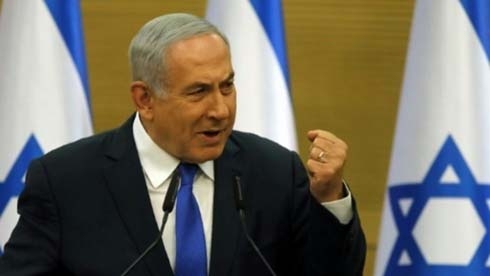
"It cannot be that the security of Israel depends on [Arab lawmakers] Ayman Odeh, Ahmed Tibi and their friends" on the Joint List Arab alliance, Netanyahu said in a video published on social media. "This is a danger to the security of Israel."
Netanyahu, of the right-wing Likud party, spoke as Gantz, of the Blue and White party, had four days left to form a government.
The stalemate following September's general election has made the task of forming a government a challenging one, as currently neither Gantz nor Netanyahu has the required majority to form a government.
On Saturday Netanyahu said it would undermine the country's security for an Israeli prime minister to have to ask Arab lawmakers in the Knesset, Israel's parliament, for approval to launch a pre-emptive military strike.
"Can anyone even imagine such a thing, something that has never happened in the history of Israel, [...] something that will pose an immediate, existential threat to the state of Israel?"
Joint List head Ayman Odeh said the president's remarks were "dangerous" and depicted the country's Arab minority, who form 20 per cent of the population, and their representatives in parliament as "enemies."
"There has never been a prime minister who has incited this way against the Arab citizens," Odeh said in remarks broadcast on radio.
Netanyahu called on Gantz to form a unity government between his Likud, which won 32 seats, and Blue and White, which won 33, in the September 17 elections.
Netanyahu was scheduled to meet Avigdor Liberman on Sunday, whose right-wing Israel Beiteinu party won eight of the 120 seats in Israel's parliament and who is seen as the kingmaker.
The long-time premier called on right-wing Israelis to attend an "emergency conference" in Tel Aviv against a minority government headed by Gantz but backed by the Joint List. The Joint List, with 13 mandates, is the third-largest party in the Knesset, but Arab-Israeli lawmakers have always declined to join any "Zionist" coalition.
Coalition negotiations went into a higher gear, as Gantz's mandate handed to him by Israel's president was set to expire at midnight (22:00 GMT) on Wednesday. Gantz was given 28 days to form a government, after Netanyahu failed to do so, amid a stalemate following the second elections in five months.
If Gantz fails to form a coalition by Wednesday midnight, this would increase the chances of a third general election in Israel within one year.
The former army chief responded to Netanyahu's statements by slamming him for using the phrase "emergency situation" while referring to the possible formation of a minority coalition backed by Arab lawmakers.
"An emergency situation is hundreds of rockets being fired at Israeli civilians," he said, calling for direct negotiations between the Likud and Blue and White, "without tricks and without [media] spins."
Gantz has stressed that he prefers a large coalition, but not with a Likud headed by Netanyahu, who faces corruption charges. Israel's attorney-general is expected to soon announce his decision on whether to recommend the prime minister be indicted.
A minority government backed by Arab-led factions is seen as unlikely, but it could be a short-term solution, aimed at forcing Netanyahu to run as a lawmaker and no longer a prime minister in the next election.
Gantz has said he would do all to avoid a third election.
The premier, for his part, has stepped up his rhetoric against an Arab-backed minority government, seemingly in a bid to pressure Gantz into accepting a unity government with a Netanyahu-headed Likud.