Lebanon anti-government protesters block roads to press demands
Prime Minister Saad Hariri resigned last week, which was a key demand of the protesters, but President Michel Aoun has not yet started consulting parliamentary blocs about a successor.
Mr Aoun has said there are some "complications" to resolve.
Many of the protesters want the entire political system to be replaced.
They blame the political class for the corruption that plagues Lebanon, its stagnant economy and high levels of public debt, and the dire state of its public services.
Over the past two weeks hundreds of thousands of people have taken part in the demonstrations in a country with a population of only six million.
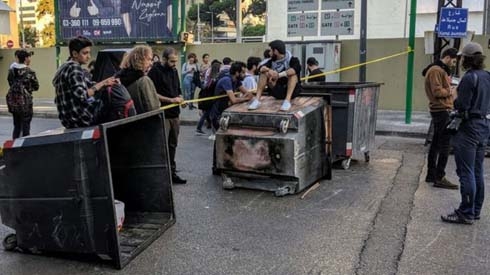
Following Mr Hariri's resignation on Tuesday, protesters dismantled the roadblocks in Beirut and other cities, in line with a request from the Lebanese army.
On Sunday, there was a large rally outside the presidential palace in the town of Baabda, south-east of Beirut, by supporters of Mr Aoun.
"I call on you all to unite," the president told them in a televised address, warning that no-one should put "one protest against another".
Mr Aoun said a plan had been drawn up to tackle corruption, revitalise the economy and build a civil state, which he said required a "big effort" to implement.
But hours later, tens of thousands of people took to the streets of central Beirut, calling on the president to resign and for the formation of a new, independent government to be sped up.
Early on Monday, protesters began blocking main roads in the capital again.
BBC