Hezbollah warns of chaos as Lebanon anti-government protests persist
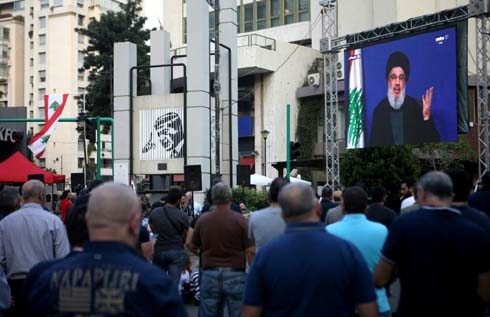
Hassan Nasrallah, an ally of Lebanese President Michel Aoun, urged protesters to give more time to the government, which last week unveiled a package of economic reforms in an effort to appease them.
"Any solution must avoid a plunge into a political vacuum, because that would be very dangerous," Nasrallah said in a televised address. "Any vacuum would lead to chaos and collapse."
"We have information and suspensions that there are efforts to drag Lebanon into a civil war," Nasrallah said without giving details. Lebanon experienced a 15-year civil war that ended in 1990.
Nasrallah's warning came shortly after dozens of his loyalists slipped into a protest in central Beirut, triggering a brief scuffle with anti-government demonstrators.
"I am here to tell those protesters that our leader Nasrallah is a red line," one Hezbollah follower told dpa.
Another loyalist, wielding a stick, said: "No one is allowed to insult our leader or say he is corrupt."
Riot police quickly deployed to divide the two sides, witnesses said.
"They came here to try to ruin our peaceful protest against a corrupt government, in which they have ministers," one anti-government protester told dpa.
In his address, Nasrallah called on his followers to leave the anti-government protest in central Beirut to prevent further tensions.
Lebanon has been rocked by mass street protests since October 17 against political and economic corruption.
On Friday, the country remained paralyzed as major roads leading to the capital were blocked by protesters for the ninth consecutive day.
Banks, schools and businesses have been shuttered since the eruption of the protests. Demonstrators have refused to leave the streets, keeping up pressure on the government to step down amid a deepening economic crisis.
Anti-government rallies have created problems for residents, some of whom complain that they are unable to reach their workplaces because of the road closures.
"We are with the protests, but the country has to open because at the end of the month, employers will not pay us," Nadia, a nurse, said.
Similarly, closure of the banks have made it difficult for people to withdraw money from ATM machines. The Lebanese Banks Association said banks would remain shut until further notice.
A bank clerk told dpa that all banks have been ordered to feed their cash machines with only the local currency. In Lebanon, people can buy goods in both the Lebanese pound and the US dollar.
In side roads in several parts of the country, food stores reopened, allowing people to stock up on food.
"We have been able so far to meet the needs of the people. But we are running out of some supplies due to the closure of some major roads," said a supermarket owner in Jal al-Deeb north east of Beirut.
The Finance Ministry reassured government employees that their salaries would be paid as usual at the end of the month despite the ongoing crisis.
Lebanon has one of the biggest public debt ratios in the world. According to figures released by the Finance Ministry in July, Lebanon’s gross debt reached 85.7 billion dollars at the end of June, up by 0.7 per cent from the end of last year.