Settlement process back at top of agenda again ahead of polls
The call by Abdullah Öcalan, jailed leader of the PKK, came three months before the general election to be held on June 7, raising doubts that the ruling party may be seeking to exploit the process for political purposes.
“I invite the PKK to convene an extraordinary congress in the spring to make the strategic and historic decision on the basis of ending the armed struggle,” Öcalan said in his call read out by a deputy of the pro-Kurdish Peoples' Democratic Party (HDP).
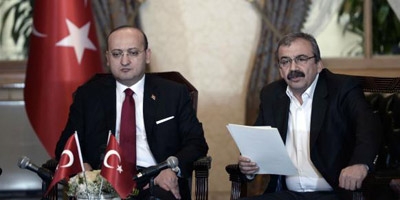
At a joint news conference with Deputy Prime Minister Yalçın Akdoğan, who is in charge of the settlement process, and Interior Minister Efkan Ala on Saturday, the HDP's Sırrı Süreyya Önder said, “We call on all democratic parties to support this democratic solution,” maintaining that Turkey is “closer than ever to peace.”
Pervin Buldan, who was one of three HDP deputies present at the joint conference in İstanbul, implied on Sunday that the government has agreed to revise the much-criticized security bill under discussion in Parliament.
Maintaining that some articles of the bill including those Parliament already passed will also be amended, the Doğan News Agency quoted Buldan, who is a HDP co-chair, as saying, “It will not pass in its current form to which we are opposed.”
The security bill, which grants extended powers to the police and governors, has been blasted by opposition parties for paving the way for a police state.
The press conference followed a 45-minute meeting between the HDP delegation, in which HDP deputy İdris Baluken was also included, and Akdoğan and Ala.
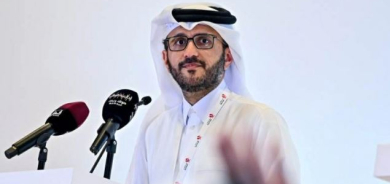
“We have reached an important point in the settlement process,” Akdoğan told the same conference. Akdoğan, who argued that peace is very close, said the democratic progress would gather momentum once arms are laid down.
The Kurdistan Communities Union (KCK), an umbrella organization that encompasses the PKK, said in a statement early on Sunday that the government should withdraw the bill as a demonstration of its sincerity.
The KCK described Öcalan's call as a historic step, but said the steps the PKK takes from now on are dependent on the government's attitude.
The KCK's statement revealed that it had also some misgivings that the ruling Justice and Development Party (AK Party) might once again be planning to exploit, without taking any substantial steps, the PKK leader's call to increase its voter support at the elections.
Since the settlement process was launched with Öcalan at the end of 2012, the government has been accused by the PKK of being engaged in delaying tactics while getting the support of the public in the previous two elections based on the ongoing process.
According to a recent poll by the ORC polling company, public support for the settlement process is at 65 percent.
Underlining that what the government does now will be closely monitored by the KCK, the statement said: “Making use of leader Apo's [Öcalan] historic declaration of goodwill as [a tool for] election propaganda would represent an example of injustice and irresponsibility towards our peoples.”
The KCK, which said the statements made during the joint press conference indicated that an important stage has been reached in the negotiations, demanded that their representatives be allowed to meet with Öcalan without any delay for the process to progress smoothly.
The government has long been waiting for Öcalan's disarmament call, but it was delayed because of lingering disagreement over Kurdish demands on how the peace negotiations must proceed.
Some representatives of the HDP, which is affiliated with the PKK, recently talked about a 10-item list of principles on which to base future negotiations.
The HDP's Buldan, who said Saturday's joint statement may be seen as a new roadmap for the settlement process, added that if the two sides achieve a consensus on the 10 items on which the negotiations will be held, then the PKK will convene its congress.
“Then, we can talk about a new Turkey,” she stated.
Hours before the HDP and government officials held the joint conference, HDP Co-chairman Selahattin Demirtaş underlined at a meeting in Antalya that reaching peace would be dependent on the government's attitude.
Referring to the controversial security bill, which the government vowed to pass despite widespread opposition, Demirtaş revealed that he was not all that optimistic that the government would take the steps needed for the process to move ahead.
He said: “The government does not give the slightest hope about [achieving] peace by the politics it has been involved in. The steps it takes are not in the least bit in line with peace.”
Before leaving for Saudi Arabia on Saturday, President Recep Tayyip Erdoğan criticized Demirtaş's remarks and drew attention to the difference in statements of those who were part of the joint press conference and Demirtaş.
“If they were principled [people], the statements made by the [HDP] delegation who met with Mr. Yalçın [Akdoğan] and those by the co-chair [Demirtaş] would be the same,” Erdoğan said.
Erdoğan underlined that after arms are laid down, peace will come and maintained that the government has met all the demands Turkey's Kurds uttered in the past.
Opposition parties represented in Parliament have reacted differently to the PKK leader's call.
Devlet Bahçeli, leader of the Nationalist Movement Party (MHP) -- which calls the settlement process a “process of treason” -- has maintained that the joint conference revealed the malicious partnership the ruling party has established with the PKK.
“The AKP [AK Party] treacherously put up a show in front of the cameras with the PKK,” the MHP leader said at a meeting in Ankara on Sunday.
Accusing Erdoğan and Prime Minister Ahmet Davutoğlu of forsaking national values and bowing to the PKK's demands, the MHP leader said in a call to AK Party voters, “Are you not going to realize that the party you support will hand Turkey over to terrorists?”
The main opposition Republican People's Party (CHP) has reacted positively to the call but underlined that the laying down of arms is the essential step to be taken and that Parliament should be included in the process.
Noting that it would not be possible to achieve peace under the shadow of the arms, Engin Altay, the CHP parliamentary group deputy chairman, told Today's Zaman that “Parliament is the only place where a final solution should be worked on.”
CHP leader Kemal Kılıçdaroğlu offered support to Öcalan's call over Twitter on Saturday, saying that the laying down of arms is the step that will bring peace to this land.
Demands by the PKK and the HDP include autonomy for the predominantly Kurdish Southeast of the country, their own security force, schooling in Kurdish, recognition of Kurdish ethnic identity and Kurdish as an official language in the Constitution.
Önder, Baluken and Buldan are members of a HDP delegation that has been regularly holding talks with Öcalan in his prison on an island off İstanbul. The HDP delegation had its last meeting with Öcalan on Friday, Deputy Prime Minister Akdoğan said.
Davutoğlu said on Saturday that the joint statement marked a new phase in the settlement process and said now everyone should refrain from any rhetoric that might encourage violence.
“The discourse of arms and violence will end, and the road will be opened for a discourse of democracy,” he told a meeting of the ruling party.
Today's Zaman