Yemen's president and PM 'resign'
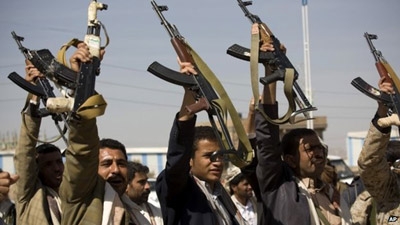
It comes amid an ongoing stand-off with Shia Houthi rebels.
Houthi gunmen have a tight grip on the capital, Sanaa, and are holding a presidential aide who was abducted last week.
There are reports that Yemen's parliament has refused to accept the president's resignation.
The Houthi leadership had previously committed to withdrawing from key positions around the presidential palace and the home of President Abdrabbuh Mansour Hadi.
But despite winning concessions under a peace deal agreed on Wednesday, the rebels - who overran Sanaa in September - have not pulled back.
Political maze
A government source told the BBC that ministers were resigning in protest at the rebels' challenge to Yemen's sovereignty and their seizure of state institutions.
In a resignation letter, Yemeni Prime Minister Khaled Baha said the cabinet did not want to be dragged into "an unconstructive political maze".
But the Saudi-owned al-Arabiya TV channel and the AFP news agency are reporting that Yemen's parliament has rejected the resignation offer of President Hadi.
There has been a week of violence in Sanaa with Houthi rebels involved in deadly exchanges with government forces.
On Monday, Houthi militiamen opened fire on Mr Baha's convoy and then later laid siege to the presidential palace, where he was staying.
Then on Wednesday the home of President Hadi was shelled, shattering a ceasefire that had been agreed only hours earlier.
The ceasefire deal had met a series of rebel demands including the expansion of Houthi representation in parliament and state institutions, according to the official Saba news agency.
In return, the rebels said they would pull back from their positions and free the president's chief of staff, whom they have held since Saturday. But so far they have not done so.
The Houthis, who follow a branch of Shia Islam known as Zaidism, have staged periodic uprisings since 2004 in an effort to win greater autonomy for their northern heartland of Saada province.
Since July the rebels have inflicted defeats on tribal and militia groups backed by the leading Sunni Islamist party, Islah, and battled AQAP as they have pushed into central and western provinces.
BBC