US Denies Relying on Iranian Kurdish Groups as Ground Forces in Expanding Iran Conflict
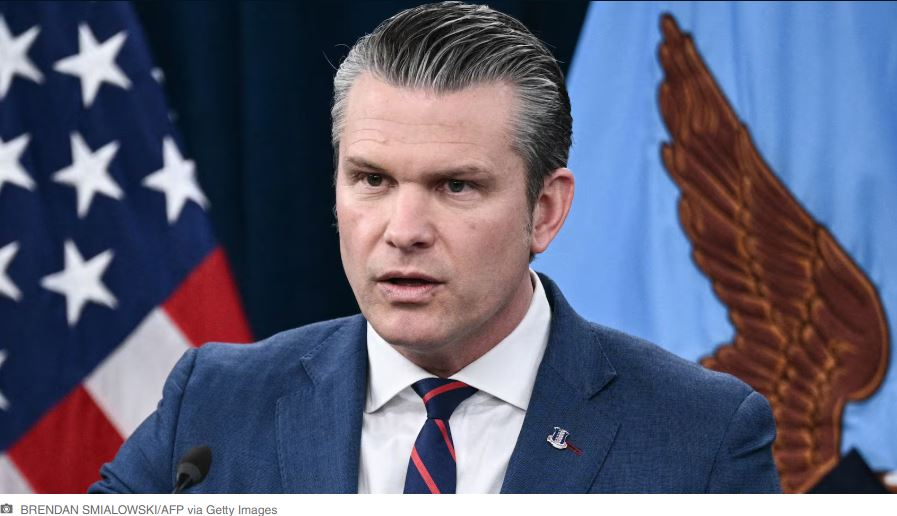
Pete Hegseth said Wednesday that the United States’ objectives in the ongoing conflict with Iran are not based on supporting or arming any specific armed faction, amid reports suggesting Washington could use Iranian Kurdish opposition groups as potential ground forces.
Speaking at the The Pentagon, Hegseth rejected suggestions that the US strategy relies on Kurdish opposition groups.
“All I would say is none of our objectives are premised on the support or the arming of any particular force,” Hegseth told reporters. “What other entities may be doing we’re aware of, but our objectives aren’t centered on that.”
His remarks come after reports that Washington may be increasing contacts with Iranian Kurdish armed factions following the launch of joint US–Israeli strikes on Iran last Saturday. The confrontation has since widened, raising concerns across the region.
Hegseth described the campaign in strong terms, claiming that US and Israeli forces were making rapid progress.
“America is winning decisively, devastatingly and without mercy,” he said, adding that the two allies were moving toward “complete control” of Iranian airspace.
However, he did not rule out the possibility of deploying American ground forces. During a press conference earlier in the week, Hegseth responded cautiously when asked about the prospect.
“No, but we’re not going to go into the exercise of what we will or will not do.”
Similarly, Dan Caine declined to address the issue directly when asked whether US troops could be deployed on the ground.
“I am not going to comment on boots on the ground,” Caine said during the same briefing.
The statements come amid reports that Donald Trump has held phone calls with several Kurdish political leaders as the conflict escalates.
According to sources cited by Rudaw, Trump spoke with Mustafa Hijri, whose party, the Democratic Party of Iranian Kurdistan, operates in exile from the Kurdistan Region.
US media outlet Axios reported that Trump also spoke with Bafel Talabani and Masoud Barzani regarding the conflict.
The Patriotic Union of Kurdistan confirmed the call, stating that Trump had “clarified the objectives of the United States in the current war” with Iran. However, the office of Barzani has not publicly confirmed the conversation.
Officials in the Kurdistan Region have repeatedly emphasized that they do not intend to be drawn into the conflict.
Qubad Talabani said Tuesday that the Region “will completely keep its neutrality.”
Although the Kurdistan Region hosts several Iranian Kurdish opposition groups in exile, the Kurdistan Regional Government maintains that its territory cannot be used to launch attacks against neighboring countries.
Political control in the Region remains divided between the two main Kurdish parties. The PUK governs Sulaymaniyah and Halabja, while the Kurdistan Democratic Party administers Erbil and Duhok.
All provinces except Duhok share borders with Iran, and Tehran has in recent days carried out several strikes targeting Iranian Kurdish opposition groups inside the Kurdistan Region.