Coordination Framework Divided Over Nouri al-Maliki’s Premiership Bid Amid Growing Internal Rift
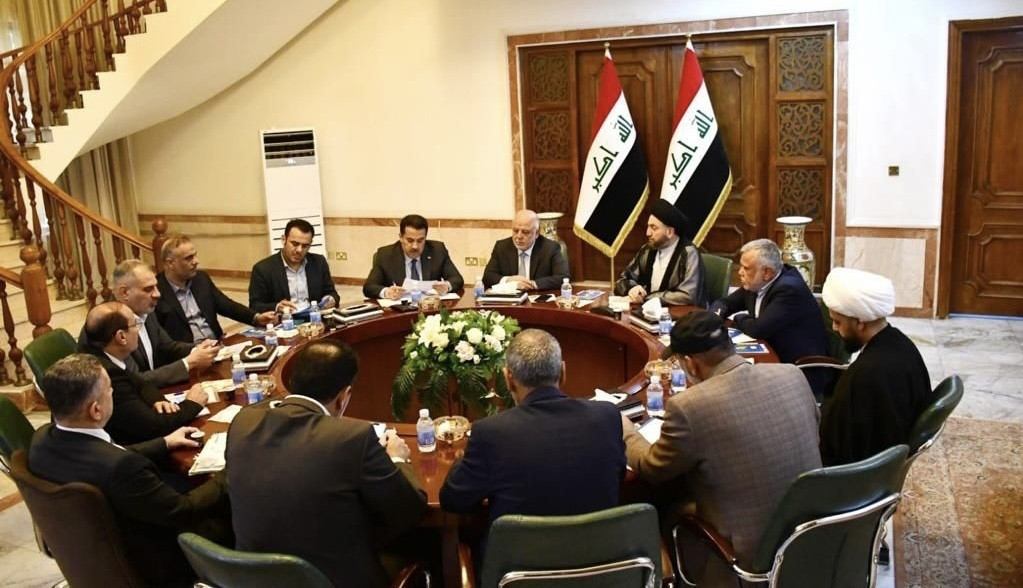
Internal divisions within Iraq’s powerful Coordination Framework have deepened over whether former Prime Minister Nouri al-Maliki should remain a candidate for the premiiership, with no consensus reached ahead of a scheduled meeting Monday evening.
Leaders within the Shiite alliance have held a series of smaller tripartite and quadripartite meetings in recent days, reflecting mounting fractures that have delayed full sessions and complicated decision-making.
Aqeel al-Rudaini, spokesperson for the Nasr Alliance, said the bloc is split into two camps — one opposed to Maliki’s candidacy from the outset and another insisting he remain in the race.
“In future meetings, discussions will focus on whether Maliki continues or whether another candidate will be designated,” al-Rudaini said, stressing that any decision must be reached by consensus within the Coordination Framework.
He also clarified that there has been no new message from Ali al-Sistani regarding Maliki, noting that references to the cleric relate to his 2014 guidance discouraging Maliki’s return to the premiership.
Al-Rudaini described the current discord as unprecedented, pointing out that the bloc’s regular Monday meeting last week was canceled after repeated postponements due to internal disagreements.
The Hikma Movement, led by Ammar al-Hakim, has denied reports of a four-way agreement to withdraw support for Maliki.
Senior Hikma member Fahd al-Jubouri said claims that al-Hakim was negotiating to abandon Maliki’s candidacy were “untrue and fabricated.” He emphasized that any withdrawal must be endorsed by a majority of Framework members and must preserve the alliance’s unity.
Al-Jubouri outlined three possible scenarios under consideration: Maliki could voluntarily withdraw; a majority of the bloc could formally revoke his nomination; or Maliki could continue as candidate, with the alliance collectively bearing responsibility for the political consequences.
Sources within the Reconstruction and Development Alliance, led by Prime Minister Mohammed Shia’ al-Sudani, indicated that Maliki faces significant internal opposition as well as regional and international concerns.
According to the sources, Sudani has urged Maliki to withdraw and signaled that he will formally declare non-support if Maliki insists on remaining a candidate. The alliance has also called for a reassessment of candidate selection mechanisms to reduce reliance on personal or partisan interests.
Victoria Taylor, Director of the Iraq Initiative at the Atlantic Council, wrote on X that Sudani’s withdrawal of support would effectively end Maliki’s prospects. She suggested Sudani’s earlier backing had been tactical rather than strategic.
Meanwhile, National Security Advisor Qasim al-Araji chaired an urgent security meeting under the direction of the prime minister to assess regional and international developments and their potential impact on Iraq’s internal stability. Officials stressed the need for a preemptive and flexible security posture.
The dispute over Maliki’s candidacy comes amid broader maneuvering within Iraq’s Shiite political sphere, where the allocation of the premiership remains central. Observers note that smaller-scale meetings among party leaders signal growing fragmentation within the Framework.
Al-Rudaini acknowledged that repeated postponements of full meetings underscore the depth of disagreements, while leaders continue ad hoc discussions to seek consensus without fracturing the alliance.
With the Coordination Framework representing a dominant Shiite bloc in parliament, its decision will play a decisive role in determining Iraq’s next prime minister and the direction of the future government.
The outcome of Monday’s meeting is expected to clarify whether Maliki withdraws, is replaced, or remains in contention — a decision that could shape Iraq’s political trajectory in the months ahead.