Iraqi Teachers Protest Allowance Cuts, Accuse Government of Prioritizing Austerity Over Anti-Corruption
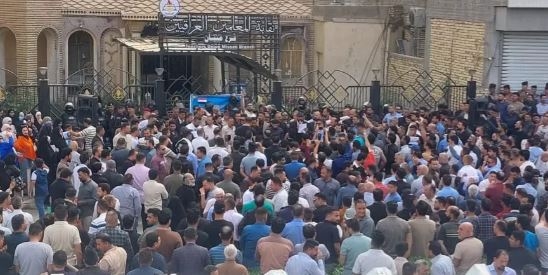
Widespread protests erupted across Iraqi provinces this week, led by teachers and civil servants angered by a federal government decision to reduce or suspend their allowances. The demonstrations, most intense in the ethnically diverse city of Kirkuk, underscore a deepening clash between public sector workers and a government they accuse of making them bear the cost of years of fiscal mismanagement and entrenched corruption.
The crisis was triggered by a recent decision from Iraq’s Council of Ministers, defended by Baghdad as a necessary step to return revenues to the general budget. However, the move has been met with fierce criticism from educators who view their allowances as a legally earned entitlement, not a discretionary bonus.
“If the government wants to restore money to the state treasury, it should reduce the number of parliament members... not take from teachers who have served for decades,” said Rebwar Ali, a protesting teacher in Kirkuk, in an interview with Kurdistan24.
In Kirkuk alone, at least four major demonstrations were reported on Sunday. Protesters carried signs and chanted slogans warning Prime Minister Mohammed Shia al-Sudani’s government against “touching their livelihoods.”
“This is our right, and we will not back down,” said civil servant Huda Imad. “We spent years of our lives in public service. The government should not treat us this way.”
The protests highlight a stark contradiction at the heart of Iraq’s economy: despite boasting one of the world’s largest oil reserves, the country perennially faces budget shortfalls and struggles to provide reliable public services. Critics argue the government is opting for socially harmful austerity instead of confronting powerful interests that siphon off state wealth.
Officials and anti-corruption monitors have long identified massive revenue leaks, notably at militia-controlled border crossings where armed groups allegedly collect unofficial fees, diverting customs income from the national treasury. Billions more are believed lost annually through smuggling, fraud in public contracts, and the embezzlement of funds earmarked for infrastructure projects.
“Financial reform should not begin from the pockets of ordinary employees,” demonstrators asserted. “The state must first confront corruption, recover stolen funds, and regain control of its revenues.”
The government’s fiscal challenge is real. Iraq employs nearly 4.5 million public-sector workers, with salaries consuming about 65% of state revenues—roughly $47 billion annually. This wage bill is widely seen as unsustainable.
Yet, protesters and their supporters contend that targeting educators and low-to-mid-level civil servants is both unjust and short-sighted, punishing the vulnerable while corrupt networks operate with impunity. They demand the decision be reversed and warn of escalating protests if it is not.