Kurdish Farmers in Kirkuk Report Systematic Campaign to Force Them From Ancestral Lands
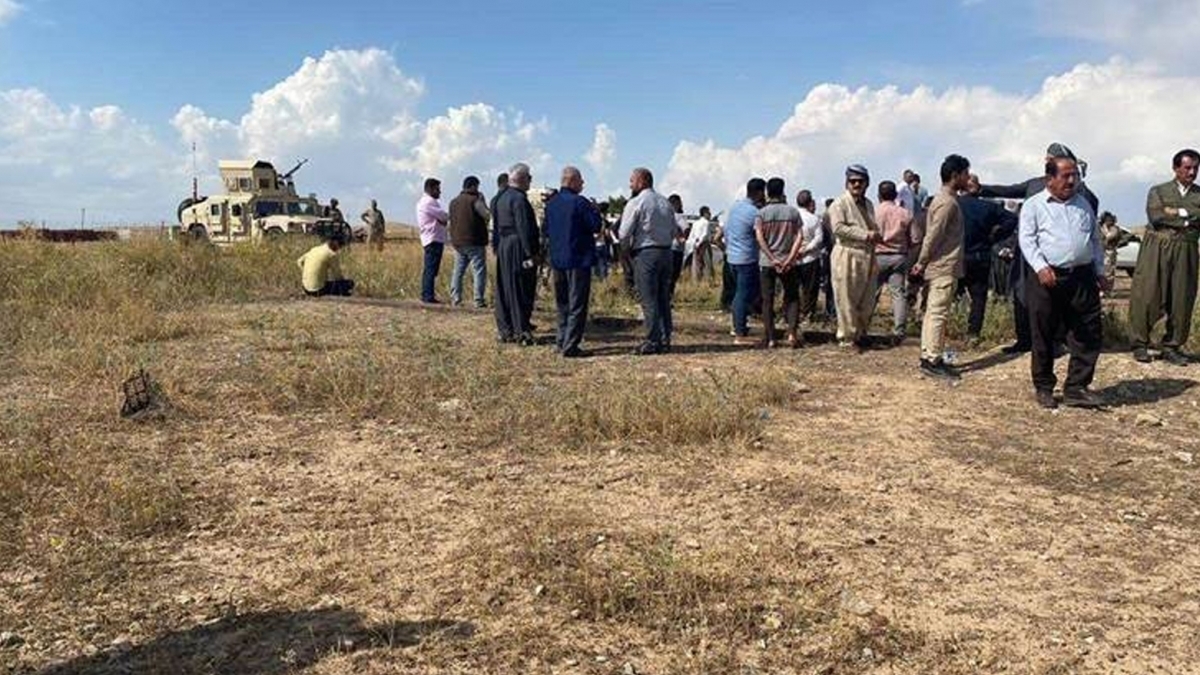
Kurdish farmers in territories outside the Kurdistan Regional Government’s (KRG) administrative control are reporting a sustained campaign of intimidation and harassment, which they describe as a new wave of Arabization aimed at dismantling their communities and agricultural livelihoods.
In areas like Kirkuk, farmers detail a systematic effort involving restricted water access, repeated detentions, and the deliberate sabotage of vital irrigation infrastructure. They allege these actions are part of an organized strategy to displace Kurdish populations through exhaustion and fear, rather than overt violence.
“They want us to give up the land and leave,” said Mohammed, a farmer from Shanagha village, who reported being detained four times this year by Iraqi army and police forces. “They keep us for two or three days, then release us on bail. But the harassment never stops.”
Evidence of the struggle is visible on the ground. Footage obtained by media outlets shows Kurdish farmers repeatedly repairing irrigation pipes that have been intentionally destroyed. They carry out this work under harsh conditions and without official support or protection.
Other farmers describe a consistent pattern of obstacles, including bureaucratic and logistical barriers preventing them from reaching their farmland and accessing water sources. Many view this as a calculated plan to erode the Kurdish agricultural presence in the disputed territories.
“Our dignity lies in our land,” stated Jouhar Rahman, a farmer from the area. “If you do not defend your land, you have no dignity.” Despite describing daily life as “unbearable” under continuous security and economic pressure, another farmer vowed, “We will not leave, no matter how harsh the circumstances become.”
The current tensions evoke dark memories of the Arabization policies enacted under Saddam Hussein’s Ba’ath regime, which involved the forced displacement of thousands of Kurdish and Turkmen families from Kirkuk and the relocation of Arab settlers to alter the region’s demographics.
Observers now warn that similar demographic engineering is re-emerging, albeit through different means. Instead of mass forced evictions, the modern approach allegedly relies on administrative, agricultural, and infrastructural restrictions to gradually diminish Kurdish control and population density. Analysts describe it as a subtle but deeply damaging tactic to the social fabric of the region.
Kurdish political leaders continue to advocate for a constitutional solution. “Our electoral program focuses on ending the legacy of the Revolutionary Command Council’s decisions, restoring property to its rightful owners, and implementing Article 140 to ensure justice and end demographic manipulation,” said Sara Sheikhani, a Kurdistan Democratic Party (KDP) candidate in Kirkuk.
Article 140 of the Iraqi Constitution mandates the normalization of conditions in Kirkuk and other disputed territories, followed by a census and a referendum to determine their final status.