Professor Dr. Deina Abdelkader to Gluan: Women continue to face significant challenges both in Muslim-majority countries and in the West
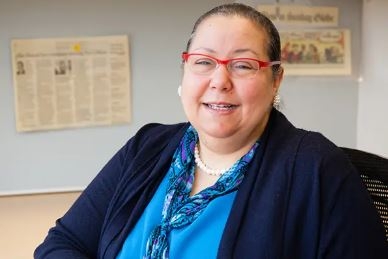
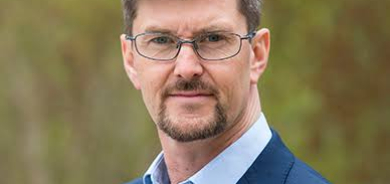
Professor Deina Abdelkader, Ph.D. Associate Professor, Director of Peace & Conflict Studies, at college of Fine Arts, Humanities and Social Sciences, the Department of Political Science, Peace and Conflict Studies, Global Studies, University of Massachusetts Lowell. Her Expertise includes, Islamic transnational movements, Islamic Legal Thought, Democratization in the Muslim World, and her Research Interests are International Relations and Comparative Politics; Middle East and North Africa: Comparative Democratization; Muslim World: Islamic Activism, Religion and Politics. "Democratization" in the Muslim/Middle East World; Intellectual and Cultural Exchange between the Middle East/Muslim World and the West; Muslim Women's Contribution to Muslim Legal Thought (Fiqh). In an inclusive interview she answered our questions like the following:
Gulan: In your book Islamic Activists: The Anti-Enlightenment Democrats (2011), you argue that democracy is not confined to Western Enlightenment traditions. Nearly fifteen years later, how do you assess the trajectory of non-violent Islamic activism across the MENA region? Have the actors and ideologies you examined evolved, and if so, in what ways?
Professor Dr. Deina Abdelkader: The situation of non-violent Islamic activism has faced serious setbacks. Many Islamic leaders, activists, and thinkers remain either unaware of—or unable to develop—comprehensive political platforms. This is partly due to the lasting impact of Orientalism and Neo-Orientalism, which shape how people in the region approach their political and social challenges. On top of this, the realities of global politics complicate democratic transitions. As seen during the Arab Spring, even when Islamic movements sought to advance their agendas, both internal limitations and external interference from regional and global powers often undermined their efforts.
When comparing cases, Tunisia experienced more political flexibility, partly because it did not directly border Israel. Egypt, however, faced a much harsher outcome due to its strategic importance in the Arab-Israeli conflict, which led international actors to prioritize stability over democratic development. As a result, movements such as Egypt’s Muslim Brotherhood and Tunisia’s Al-Nahda faced repression, with leaders imprisoned or silenced and their grassroots networks dismantled. This left little space for the emergence of new ideologies. One of the core problems was that these groups failed to take decisive control of state institutions—such as the military and security forces—when they briefly gained power. Beyond this, a deeper structural issue lies in the region’s neglect of the social sciences. Unlike political scientists or social scientists, who study governance and global complexities, many Islamist leaders lacked the training to navigate such challenges. In much of the Muslim world, students are encouraged to pursue careers in engineering, medicine, or law, while the social sciences are undervalued. This has left political movements ill-equipped to understand and manage the complex domestic and international realities of governance.
Gulan: In your article “Coercion, Peace and the Issue of Jihad” (2011), you examined the intricate relationship between religious concepts and political action. Considering the current geopolitical shifts in the Middle East, do you believe your interpretation of Jihad as a sociopolitical concept still holds relevance, or does it require reconsideration?
Professor Dr. Deina Abdelkader: The term jihad in Arabic fundamentally means “to strive” or “to make an effort,” which is a point of consensus. However, both within Muslim communities and in broader media discourse, it has increasingly come to be equated exclusively with violence and armed struggle—an association reinforced by Western media narratives. To move forward, it is essential to reject this colonially imposed framing, particularly as evolving power structures in the Middle East create opportunities for rethinking such concepts. Historically, Islamist movements often revert to violence when suppressed by their own governments or by international powers. For instance, after the Rabaa massacre, some members of the Muslim Brotherhood fled to northern Sinai and later joined ISIS. My research consistently shows that violent responses emerge primarily as reactions to state or systemic violence. Yet, it is equally important to recognize that such interpretations appeal only to a small minority; the majority of Muslims do not embrace this path.
Gulan: Many governments in the region promote a particular interpretation of religion as part of their national identity. How does this “official religion” influence pluralism, minority rights, and democratic development?
Professor Dr. Deina Abdelkader: The way a state defines and promotes an official religion is a critical test for pluralism, minority rights, and democratic growth. In fact, it reveals whether or not genuine democratic practices are being embraced. A constitution, by its very nature, must be inclusive and reflective of the rights of minorities—this is the real litmus test of any democratic transition. For example, when Turkey and Egypt drafted their constitutions, questions of inclusion and minority rights became deeply contested. Inclusivity must therefore remain central to the process. I often point to Sheikh Rached Ghannouchi as an example—he wrote his master’s thesis on the integration of minorities. Unlike many traditional scholars educated in institutions such as Qarawiyyin or al-Azhar, Ghannouchi received a liberal education, which gave him a broader awareness of how essential minority inclusion is to democratization.
Gulan: You have done pioneering work on the role of Muslim women in religious interpretation. What do you see as the most pressing challenges and opportunities for women scholars today, especially within academic and juristic institutions?
Professor Dr. Deina Abdelkader: Women continue to face significant challenges, both in Muslim-majority countries and in the West. One key issue is the disconnect between current interpretations of Islam and the historical record. Historically, women played an active role as jurists (fuqaha), transmitters of hadith, and participants in both war and peace. Yet this legacy is often forgotten, leading some to claim that women should not take part in religious scholarship. A striking example is Sayyida Nafisa, a descendant of the Prophet who was one of the most respected scholars in Egypt. Imam al-Shafi‘i himself was among her students. When asked to speak in his memory, she praised his devotion to ablution—an acknowledgment that she was not only his senior in scholarship but also deeply respected in her own right. This shows that women historically held positions of intellectual authority equal to, and sometimes greater than, their male counterparts. Unfortunately, this tradition has been marginalized, and women scholars today must work against both cultural resistance and institutional exclusion to reclaim their rightful place in Islamic interpretation.
Gulan: As a scholar of comparative democratization, when you consider recent global trends—such as the aftermath of the 2011 Arab Spring and the rise of populist movements—what do you see as the most promising signs for democratization, and what concerns you the most?
Professor Dr. Deina Abdelkader: Unfortunately, the outlook is bleak. The region is engulfed in crises—whether in Yemen, Sudan, Syria, Tunisia, Egypt, or Libya—each faces profound political and structural challenges. A key issue is that Muslim-majority societies have struggled to establish a clear and substantive political vision. This shortcoming is deeply tied to the lingering impact of colonialism, not only in political institutions but also in the mindset and intellectual frameworks of these societies. Beyond domestic shortcomings, international dynamics further complicate democratic transitions. Regional conflicts—such as the rivalry between Iran and Saudi Arabia, or the broader Arab-Israeli conflict—create fault lines that external powers often exploit for their own strategic interests. These overlapping pressures make democratic development extremely fragile. For democratization to succeed, domestic reform and international conditions must align, which is a rare and difficult balance. Unlike Western democracies such as the United States, Britain, or France—where democratic evolution largely unfolded through internal struggles without significant foreign interference—Middle Eastern societies face both internal divisions and external intervention simultaneously. The Arab Spring briefly presented an opening, when diverse groups—Islamists, secularists, and leftists—could have set aside differences to prioritize democratic transition. But that opportunity was lost, as divisions persisted, leaving societies vulnerable to manipulation from within and abroad. Without unity and a shared vision, the region remains fragmented, making meaningful democratic progress exceedingly difficult.
Gulan: As Director of the Peace and Conflict Studies program, what insights does your research provide on reconciling religious identities with democratic governance to build sustainable peace in conflict-affected regions of the Islamic world?
Professor Dr. Deina Abdelkader: As Director of the program, much of my work with students centers on exploring peaceful approaches to conflict resolution through dialogue and soft power—drawing on theories such as those advanced by Joseph Nye. We emphasize the critical distinction between negative and positive peace. Negative peace refers to the mere absence of violence, such as a temporary ceasefire in Gaza, which is inherently fragile and unsustainable. Positive peace, by contrast, involves genuine reconciliation, where opposing parties—such as Israelis and Palestinians—accept one another’s right to coexist with mutual respect. Achieving this requires more than halting violence; it demands acknowledgment of past injustices and a willingness to reconcile. Religion, rooted in ethics and moral principles, can play a constructive role in this process. However, it is important to note that religion itself is not the primary source of conflict in the Middle East. Historically, under the Ottoman Empire, Christians, Jews, Muslims, and Druze coexisted with relative harmony. The more recent divisions largely stem from colonial and post-colonial policies of “divide and rule,” perpetuated by global powers to exert influence over predominantly Muslim societies. These legacies continue to shape today’s conflicts, underscoring the need for reconciliation grounded in mutual recognition and respect.
Gulan: Despite the region’s abundant natural resources, many Middle Eastern countries continue to face high unemployment, particularly among young people. To what extent is this primarily a governance issue, and to what extent do deeper structural and cultural factors contribute?
Professor Dr. Deina Abdelkader: The problem stems from a combination of factors. Domestically, for example, Egypt under Nasser introduced free higher education without a corresponding plan to absorb the growing number of graduates into the labor market. This mismatch has only intensified with today’s large youth population, creating even greater employment pressures. Moreover, across much of the MENA region, economic opportunities are heavily controlled by elites and the state. When access to work, mobility, marriage, and family life is limited to the advantage of the top 10%, it creates a recipe for social unrest.
At the regional level, there is also little cooperation to address economic challenges such as job creation, sustainable growth, and reducing dependence on major external powers like the US, EU, or China. Unlike Africa, which has made some progress toward greater regional economic integration, the Middle East and broader Muslim-majority world have struggled to coordinate efforts. This lack of unity has left the region unable to fully leverage its wealth for genuine economic development.
Gulan: From your perspective, what is the most significant lesson from the recent developments in the region? What do you see as the main stakes for the wider Middle East, and what concerns you the most?
Professor Dr. Deina Abdelkader: This is a crucial question. While the situation remains uncertain, recent events—especially the Iran-Israel-U.S. dispute—could reshape the political dynamics of the region. Iran has shown strength, but in a measured and cautious way. These shifts are influencing broader regional calculations. For example, after decades of ideological and military rivalry, there are indications—though still tentative—that Saudi Arabia is exploring a rapprochement with Iran. The October events in Gaza have further altered the balance of power. Although conflicts in places like Yemen and Sudan are unlikely to be resolved quickly, I believe these evolving dynamics could eventually play a constructive role in stabilizing the region, albeit over a long and complex process.