China Establishes Global Mediation Organization in Hong Kong, Garnering Support from Over 30 Countries
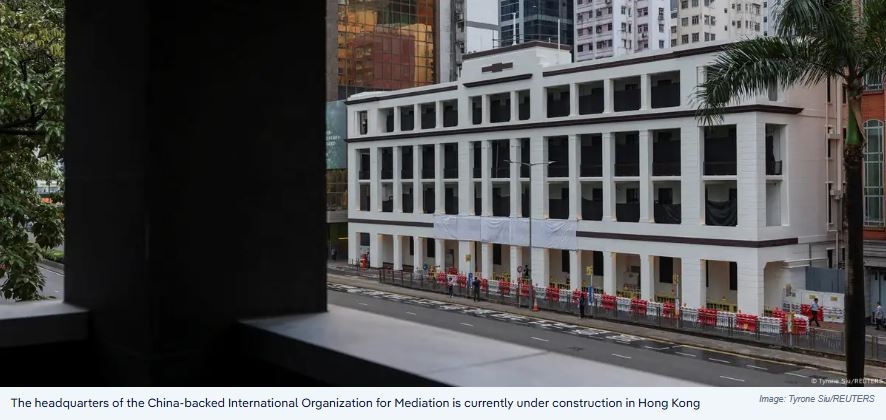
China on Friday signed a landmark convention to establish a global mediation-based dispute resolution organization in Hong Kong, aiming to elevate its status alongside institutions like the International Court of Justice (ICJ). The move signals Beijing's growing influence in international governance, particularly among developing nations.
More than 30 countries, including Laos, Cambodia, Serbia, Papua New Guinea, and Venezuela, backed the Convention on the Establishment of the International Organization for Mediation (IOMed). Other founding members include Pakistan, Indonesia, Belarus, and Cuba.
Chinese Foreign Minister Wang Yi hailed the initiative, stating, "The birth of IOMed will help transcend the zero-sum mentality of 'win or lose,' promote the amicable resolution of international disputes, and build more harmonious international relations."
By hosting the new organization, China seeks to reinforce Hong Kong's role as an international legal and dispute resolution center in Asia, further integrating the city into Beijing’s broader geopolitical strategy.
The formation of IOMed comes amid waning U.S. engagement in multilateral institutions under former President Donald Trump, who withdrew from key bodies like the UN Human Rights Council and the World Health Organization (WHO). China has increasingly stepped into this void, expanding its influence in the United Nations, WHO, and now mediation diplomacy.
The strong backing from developing nations highlights Beijing’s growing sway in the Global South, where it has positioned itself as an alternative to Western-led governance structures.
Unlike traditional adversarial legal mechanisms, IOMed emphasizes mediation and consensus-building, aligning with China’s preference for non-confrontational diplomacy. Analysts suggest this could reshape how international conflicts are managed, particularly in regions where Western-led institutions face skepticism.
As the organization takes shape, observers will watch whether it gains broader global acceptance—and how it interacts with established bodies like the ICJ. For now, its launch marks another milestone in China’s rising role in shaping global governance.