Prominent Iraqi Politician Mithal al-Alusi Condemns Suspension of Kurdistan Region Salaries as "Unconstitutional and Dangerous"
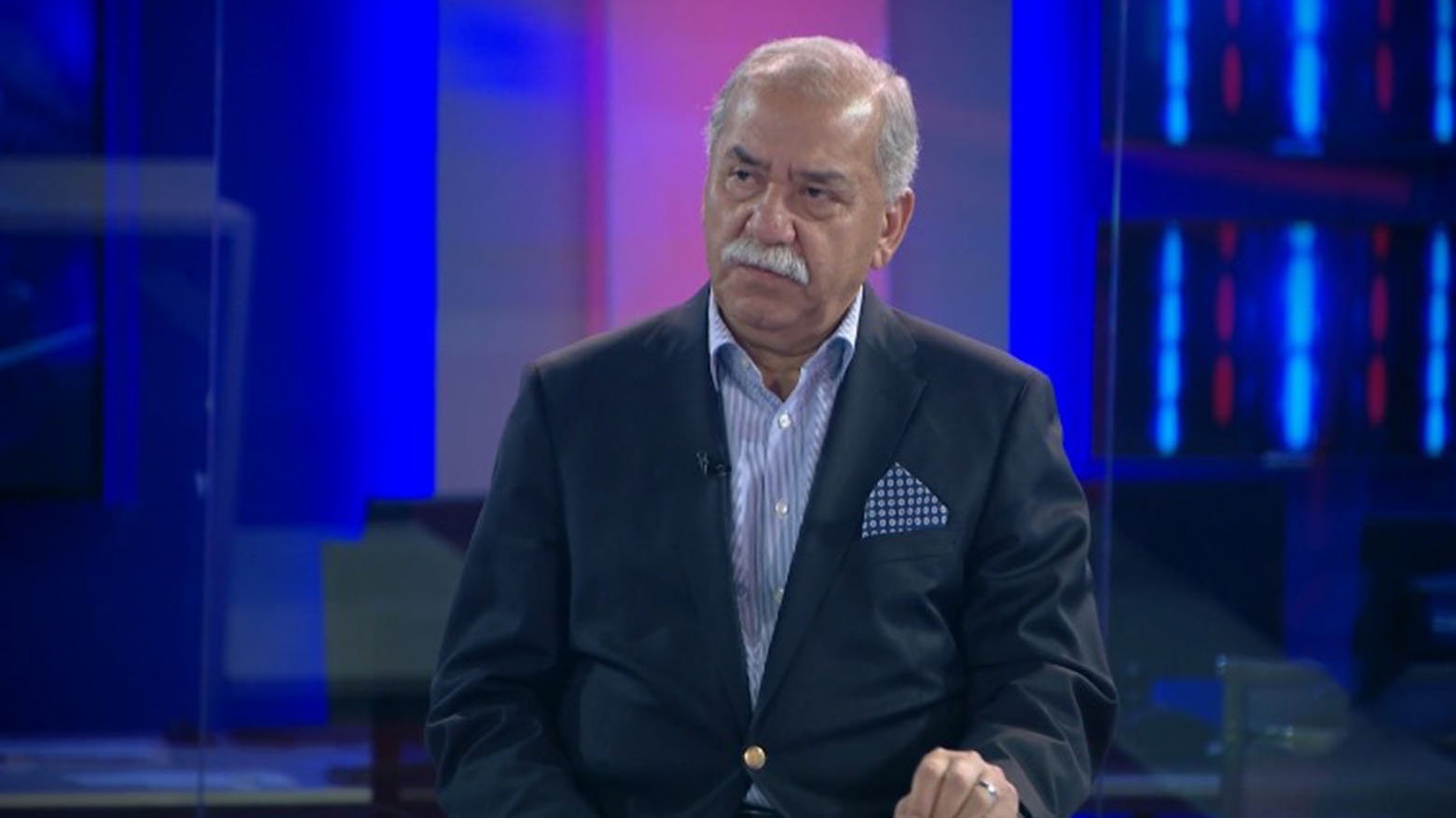
Mithal al-Alusi, a prominent Iraqi independent politician, has strongly criticized the Federal Ministry of Finance’s decision to halt salary payments to public servants in the Kurdistan Region, calling it "unconstitutional, illegal, and a violation of the government agreement."
In an interview with Kurdistan24, al-Alusi denounced the move as an impulsive act that undermines the principles of Iraq’s current government.
“This cabinet was formed based on a government program, so how can a minister within it make such a decision?” he questioned, warning that the suspension threatens national stability.
Al-Alusi took issue with the Ministry’s justification, which relied on internal estimations to determine budget allocations.
“The statement says ‘based on our estimations’—meaning an official, director general, or even a department head is arbitrarily deciding Kurdistan’s share,” he said. “Millions of people’s livelihoods cannot depend on one person’s judgment. What if these estimations are wrong?”
The salary issue, al-Alusi noted, dates back to 2014 and has persisted due to Iraq’s entrenched political divisions. He blamed sectarian factions for exploiting the crisis, accusing them of shifting alliances for political gain.
“To cut salaries during these sacred Islamic days is, in my view, a major crime,” he said, urging Prime Minister Mohammed Shia al-Sudani and the Council of Ministers to reverse the decision immediately.
Al-Alusi drew a sharp comparison between the salary suspension and global condemnation of Israel’s blockade on Gaza.
“The world considers starving Gazans a heinous crime, and Iraqi authorities accuse Israel of it. Yet, they are doing the same to their own citizens,” he said. “Salaries are a constitutional right, and Kurds are partners in governance.”
He called the move an “unprecedented ethical breach.”
Al-Alusi alleged that the decision was politically motivated, influenced by external actors—a veiled reference to Iranian-backed factions.
“As elections approach, some are trying to corner the Prime Minister, using salaries as a political card to fuel fascist ideologies,” he said. “This cannot be allowed.”
Highlighting Iraq’s financial dependence on the U.S., al-Alusi noted that Iraq’s oil revenues are held in the U.S. Federal Reserve.
“If the U.S. President doesn’t authorize disbursements, not a single dinar from oil sales reaches Iraq,” he said. He demanded that the Kurdistan Region’s budget share be sent directly to Erbil to avoid manipulation in Baghdad.
Al-Alusi blasted Baghdad’s centralized governance, calling it “sectarian, ideological, and authoritarian.”
Addressing Finance Minister Taif Sami and PM al-Sudani directly, he challenged: “You have disputes with the Sadrist Movement—would you dare cut their salaries?”
Solidarity with Kurdistan and Warning of Theocratic Agenda
Al-Alusi expressed solidarity with the Kurdish people, stating, “The Kurds are far greater than to be defeated by these political games.”
He warned that some factions seek to replace Iraq’s constitutional federalism with a theocratic system like Iran’s Wilayat al-Faqih, a model he said is incompatible with Iraq’s diversity.
Al-Alusi’s remarks underscore growing tensions between Baghdad and Erbil over financial rights and governance. His call for urgent intervention highlights fears that the salary suspension could deepen Iraq’s political and sectarian divides.
As the crisis escalates, pressure mounts on the federal government to resolve the issue before further destabilizing the country.