Syrian Foreign Minister Urges Swift Implementation of Damascus-SDF Agreement to Prevent Unrest
Syrian Foreign Minister Asaad al-Shaibani on Monday called for the immediate implementation of a landmark agreement between Damascus and the Kurdish-led Syrian Democratic Forces (SDF), warning that any delay could spark renewed instability and invite foreign interference.
Speaking at a joint press conference in Ankara alongside his Turkish and Jordanian counterparts, Shaibani described the deal as a “critical opportunity” to unify Syria following over a decade of conflict and division.
“Postponing the implementation of this accord will only prolong instability and invite external interference,” Shaibani stated. “This is a moment for national reconciliation, not hesitation.”
Signed in March by Syria’s transitional government under President Ahmed al-Sharaa, the agreement aims to integrate Kurdish-administered institutions and armed forces into the national framework by the end of the year. The accord covers both civilian administration and military coordination in areas controlled by Kurdish forces since the start of the civil war in 2011.
Shaibani stressed that the effort is not an attempt to impose central authority but rather a step toward inclusive governance.
“Our goal is to reunify Syria under shared sovereignty, ensuring equal rights for all communities,” he said.
The press conference followed significant developments in the region, including the recent dissolution of the Kurdistan Workers’ Party (PKK), which announced the end of its armed struggle. The move was hailed by the SDF as a major breakthrough for peace and political progress.
General Mazloum Abdi, commander of the SDF, described the PKK’s disbanding as a “historic turning point” and expressed optimism that it would lead to greater regional stability.
While the SDF has consistently distanced itself from the PKK, many of its fighters have roots in the People’s Protection Units (YPG), a Kurdish militia group that Turkey considers affiliated with the PKK.
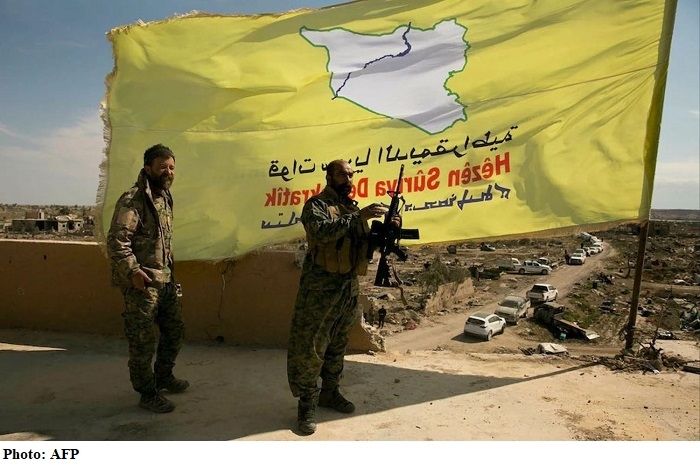
The SDF, backed by the United States, played a key role in defeating the Islamic State, helping to liberate its final stronghold in 2019. Since then, Kurdish forces have governed much of northeastern Syria under the Autonomous Administration of North and East Syria (AANES), which advocates for decentralized governance and progressive social reforms.
However, Kurdish officials have voiced concern over a temporary constitution introduced by Damascus earlier this year, criticizing it for failing to adequately represent Syria’s ethnic and cultural diversity.
The coming months will be critical for the success of the agreement, as both sides work to bridge long-standing divisions and establish a more unified and inclusive Syrian state.