Turkish Nationalist Leader Thanks Imprisoned Kurdish Politician for Role in Peace Process
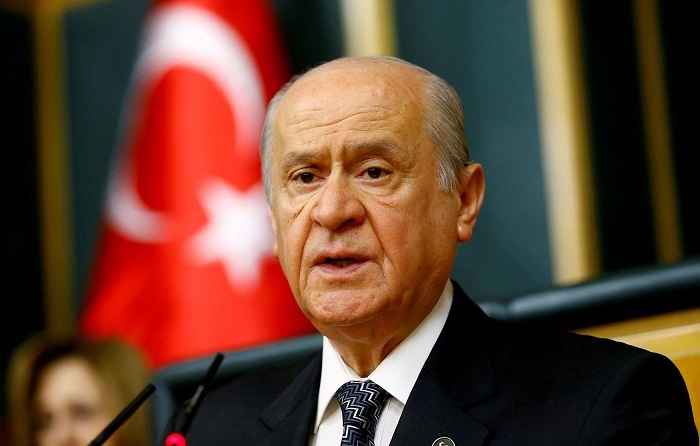
In a rare and unexpected gesture amid longstanding political tensions, Devlet Bahçeli, leader of Turkey’s Nationalist Movement Party (MHP), reportedly reached out to Selahattin Demirtaş, the imprisoned former co-chair of the pro-Kurdish Peoples’ Democratic Party (HDP), to express his gratitude for Demirtaş’s contributions to advancing peace efforts between the Turkish government and the Kurdistan Workers’ Party (PKK).
According to a report by HaberTürk on Sunday, Bahçeli personally called Demirtaş, who has been detained since 2016, to thank him for his support in fostering dialogue and progress in the peace process. This development comes in the wake of a historic statement by PKK founder Abdullah Öcalan on February 27, 2025, in which he called on the PKK to disarm and dissolve itself, marking a potential turning point in Turkey’s decades-long conflict with the Kurdish militant group.
PKK Declares Ceasefire Following Öcalan’s Call
In response to Öcalan’s appeal, the PKK announced a ceasefire with Turkey on Saturday. The group’s executive committee emphasized the importance of implementing Öcalan’s message, describing it as a critical step toward a “new historical process” in Kurdistan and the broader Middle East. The ceasefire has been widely viewed as a significant step toward ending the conflict, which has claimed tens of thousands of lives since the 1980s.
Erdoğan Hails “Historic Opportunity”
Turkish President Recep Tayyip Erdoğan welcomed Öcalan’s statement, calling it a “historic opportunity” for Turkey’s future. In a public address, Erdoğan reiterated his government’s commitment to national unity and stability, emphasizing the importance of seizing the moment to ensure lasting peace. He also acknowledged the role of various stakeholders, including political leaders and civil society, in facilitating the peace process.
A Symbolic Gesture Amid Deep Divides
Bahçeli’s phone call to Demirtaş is seen as a symbolic gesture, given the deep political and ideological divides between the MHP, a staunchly nationalist party, and the HDP, which has faced significant pressure from the Turkish government over its alleged ties to the PKK. Demirtaş, a prominent Kurdish politician and former presidential candidate, has been imprisoned for years on terrorism-related charges, which he and his supporters deny, calling them politically motivated.
The outreach by Bahçeli, a key ally of President Erdoğan, underscores the shifting dynamics in Turkish politics as the country navigates a potential resolution to one of its most protracted conflicts. While the path to peace remains fraught with challenges, the recent developments have sparked cautious optimism among observers and stakeholders alike.
What’s Next?
As Turkey enters this new phase, attention will focus on the implementation of the ceasefire and the broader peace process. The involvement of figures like Demirtaş, as well as the response from Kurdish communities and political groups, will be critical in determining whether this moment can translate into a lasting resolution. For now, Bahçeli’s gesture serves as a reminder of the complex and evolving nature of Turkey’s political landscape.