Iraqi Federal Supreme Court Delays Decision on Kurdistan Parliamentary Election Law
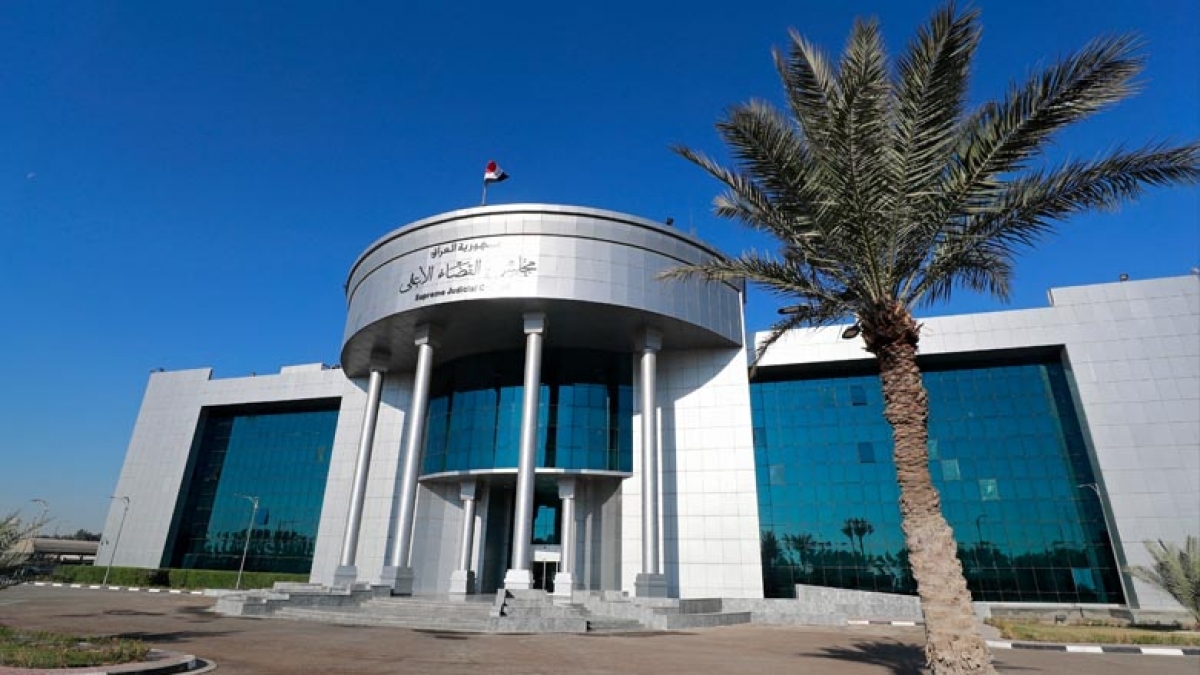
In a development that has raised both anticipation and concerns, the Iraqi Federal Supreme Court has, for the eighth time, postponed the hearing on the Kurdistan Parliamentary Election Law. The decision to defer the ruling was announced on Sunday, with the court scheduling the next session for the upcoming month.
The postponement centers around complaints filed against specific articles of the Kurdistan Regional Government's (KRG) parliamentary election law. Ziad Jabar, head of the Patriotic Union of Kurdistan (PUK) faction in the fifth session of the Kurdistan Parliament, and Amanj Najib Shamoon, a Christian member of the Sulaimaniyah provincial council, are the complainants.
The complaints target five key articles within the Kurdistan Parliamentary Election Law, addressing critical aspects of the electoral process:
Article 1 (1): Specifies that the Kurdistan-Iraq Parliament will consist of 111 members.
Article 9: Declares the Kurdistan Region of Iraq as a single polling district, divided into multiple polling stations.
Article 15: Outlines the preparation of a voter list for the Kurdistan Region, recording details such as occupation, address, date, and place of birth.
Article 22: Governs the formation of candidate lists at the Kurdistan-Iraq level, emphasizing a minimum of 30 percent female representation, with each list having no fewer than three candidates.
Article 36: Allocates seats to specific ethnic and religious communities, including Chaldeans, Syrians, Assyrians, Turkmen, and Armenians.
The decision to adjourn has sparked concerns over its potential impact on the upcoming parliamentary elections in the Kurdistan Region. The complaints address critical issues related to the number of parliamentary seats, the structure of single-circuit and multi-circuit elections, and the allocation of final seats in the Kurdistan Parliament.
The Kurdistan Parliamentary Election Law has been subject to legal scrutiny and multiple delays, creating an atmosphere of uncertainty as stakeholders await the court's final decision. The outcome will undoubtedly influence the electoral landscape in the Kurdistan Region of Iraq, and observers are keenly watching for the court's ruling next month.