Rights monitors slam Turkish plan for refugee resettlement in NE Syria ‘safe zone’
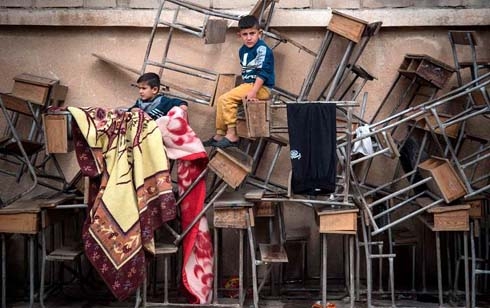
“It is chilling that Turkey’s deal with Russia this week agrees to the ‘safe and voluntary return’ of refugees to a yet to-be-established ‘safe zone.’ Returns until now have been anything but safe and voluntary – and now millions more refugees from Syria are at risk,” said Anna Shea, a researcher at Amnesty International.
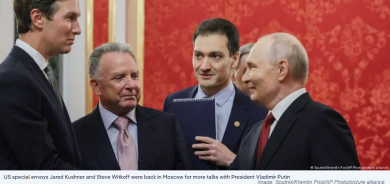
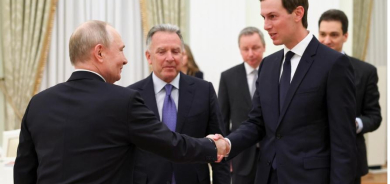
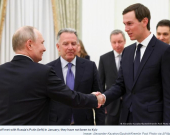
Turkish President Recep Tayyip Erdogan and Damascus-ally Russian President Vladimir Putin agreed in Sochi on Tuesday to take control over the border between Turkey and Kurdish areas of northern Syria. Their agreement demands the Kurdish forces withdraw 30 kilometres from the border and that joint Turkish-Russian forces will patrol a 10-kilometre deep stretch of the border.
Erdogan has said that he wants to resettle one to two million refugees in the “safe zone.”
“‘Safe zones’ established during other conflicts have rarely been safe and establishing one cannot be used to justify forcibly returning refugees,” said Human Rights Watch in a report on Turkey’s plan.
Both Amnesty International and Human Rights Watch documented cases of Turkey forcibly moving refugees to Syria’s Idlib province where the Syrian regime is waging a military campaign to retake the province from jihadist groups now in control. The returnees said they were beaten, threatened, and forced to sign documents they could not read.
“Turkish officials’ claim that all Syrians returning to their country are happy to go ring hollow in the face of evidence to the contrary,” said Gerry Simpson, associate crisis and conflict director at Human Rights Watch. “Turkey hosts four times as many Syrians as the European Union, but that does not mean it can return them to a war zone.”
Turkey is hosting 3.65 million Syrian refugees and claims 315,000 have voluntarily returned.
After his diplomatic wins, striking deals with Washington and Moscow that finally give him the control over the Turkey-northern Syria border he has long sought, in a televised interview with state-owned TRT late Thursday, Erdogan appeared to be developing plans to redesign northern Syria.
"This is a large area," he said, indicating an area around Hasaka, northern Syria on a map. "It is significant to keep such a large area under control and turn it into a livable area. Arabs are the most suitable there. These areas are not suitable for the lifestyle of Kurds."
Asked what he was basing his assertion on, Erdogan replied "because there areas are usually desert."
Kurds accuse Turkey of planning to carry out ethnic cleansing and demographic change, uprooting the Kurdish population from their homes, and pushing them away from the border to make way for refugees who come from other parts of Syria.
The Kurdish-led Syrian Democratic Forces (SDF) were not a party to talks between Erdogan and Putin, and commander of the force Mazloum Kobani Abdi has said they have reservations about the deal.
On Friday, the Syrian Democratic Council (SDC), the political wing of the SDF, said they have submitted a “road map to Russia,” one that preserves Syria’s territorial integrity.
The SDC and SDF have focused their message on Syrian solutions for Syrian problems, stressing that they do not seek separatism, but want to be a part of building a new Syria.
The Kurds have tried in the past to open a conversation with Damascus, but no direct talks are ongoing now, spokesperson for the Kurdish armed forces, the People’s Protection Units (YPG) told Rudaw in a recent interview.
“We have not had any direct talks with the Syrian government. They are moderated by Russia,” said Nuri Mahmoud. Even Syrian forces recently deployed to SDF areas have been mobilized in accordance with “Russian instructions rather than Damascus,” he said.
According to the SDC, the Russians have given their proposed road map a positive reception.
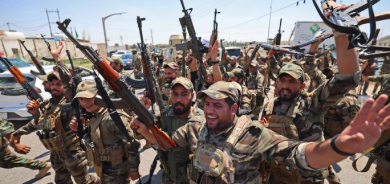
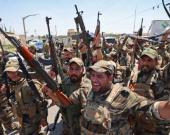
The Kurds have already made an agreement with Damascus, via Russia, for regime forces to bolster security on the border. On Friday, tens of vehicles – mainly trucks and buses filled with Syrian soldiers – were seen on the road from Qamishli to Tel Tamr, bringing light and heavy weapons in a large mobilization to SDF-held areas.
“Everything is under control and we are going to the border,” a soldier told Rudaw’s Halkawt Aziz.
"We are doing our duty by being deployed to all Syrian territory," said another.
"Our morale is high and we will re-control every inch of Syrian territory,” said a third.
The European Parliament has called for the United Nations to take the lead in northern Syria and establish a security zone.
Some 300,000 people have been displaced from their homes since Turkey launched its military operation in northern Syria on October 9.
Rudaw