'Showtime:' ECB prepares to unveil new monetary stimulus plan
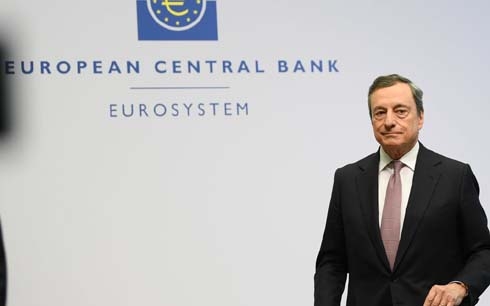
"It's showtime for the ECB," Danske Bank wrote in a note for clients ahead of the release of details of the bank's fresh bid to boost stubbornly low inflation and fire up the 19-member currency bloc economy.
Highlighting the eurozone's downbeat outlook, the region's industrial production slumped more than expected in July, according to data released as the ECB met in Frankfurt to put the final touches on its package of monetary measures.
Monthly output contracted by a bigger-than-forecast 0.4 per cent in July, according to the European Union's statistics office (Eurostat).
The decline followed a sharp fall in production in the eurozone's biggest economy in Germany, where the manufacturing sector has been hit by the escalating US-China trade war.
German inflation also slowed sharply in August following lower energy costs, according to data released on Thursday.
Annual consumer prices in Germany rose 1.4 per cent in August, down from the 1.7-per-cent increase in July, the Federal Statistics Office (Destatis) said. The August rate was in line with analysts' forecasts.
The lower German inflation rate raises the prospects of the ECB trimming its outlook for consumer prices when Draghi unveils the bank's new set of growth and inflation projections at his press conference later on Thursday following the meeting of the bank's 25-member governing council.
However, it remains open how far the ECB will be prepared to go in its bid to keep the 19-member currency bloc on a growth path and drive consumer prices back up towards the banks' annual inflation target of just below 2 per cent.
Analysts expect the ECB to keep its benchmark refinancing rate on hold at an historic low of zero per cent.
However, the bank is widely predicted to lower its deposit rate deeper into negative territory as well as possibly setting out plans for restarting the quantitative easing scheme that it shut down in December.
Financial markets expect the ECB to say it has lowered the deposit facility - which sets the rate for banks parking funds at the ECB - from minus 0.4 per cent to minus 0.5 per cent.
The ECB hopes that a lower deposit rate will encourage banks to lend and consequently boost economic growth.
However, instead of a 10-basis-point cut, some analysts believe the ECB could go further, trimming the deposit rate by 20 basis points, consequently lowering it to minus 0.6 per cent.
Many analysts are also expecting the ECB to announce a framework to help mitigate the impact of negative interest rates on the banking profits,
Thursday's package of measures is also expected to include plans to restart the ECB's quantitative easing programme with moves to spend about 30 billion euros (33 billion dollars) a month on a new bond-buying scheme over a restricted period of up to two years.