Weakened Dorian pounds Bahamas with catastrophic winds, storm surge
Prime Minister Hubert Minnis described the devastation on the Caribbean island chain as "unprecedented."
"Dorian remains an extremely dangerous storm. Our focus right now is rescue, recovery and prayer," Minnis said at a news conference.
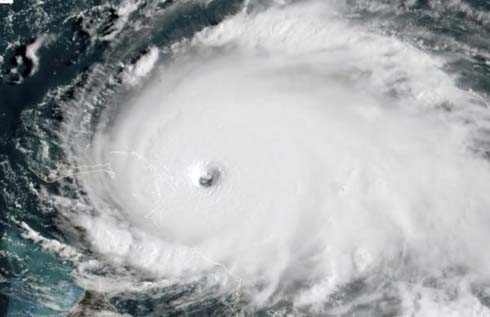
Dorian made landfall on the Abaco Islands, in the northern Bahamas, on Sunday. The slow-moving storm was downgraded to a category 4 hurricane Monday morning as its sustained wind speeds slowed to 250 kilometres per hour, the National Hurricane Center (NHC) said.
Grand Bahama Island "continues to experience catastrophic winds and storm surge," the NHC said in its 11 am (1500 GMT) update.
The eye of the storm was about 50 kilometres north-east of Freeport on Grand Bahama Island and 180 kilometres east of West Palm Beach, Florida, the NHC said.
The Miami-based centre described Dorian as an "extremely dangerous" storm, saying that while it is gradually weakening, it is expected to remain a powerful hurricane over the next couple of days.
Dorian has knocked out some power and communications as it crawls over the Abaco Islands, moving at about 2 km/h towards Florida.
Videos posted on social media showed downed telephone poles, cars flipped over and massive waves crashing ashore in heavy rain.
A British Royal Navy auxiliary ship, RFA Mounts Bay, was due to arrive Monday in the Bahamas, bringing supplies and specialized equipment.
The Bahamas is an independent country within the British Commonwealth.
Evacuation orders were posted for parts of coastal Florida as the NHC extended its storm surge warning northward into Georgia.
The potential storm surge of rising water moving inland from the coast could cause life-threatening inundation, the NHC said.
Florida Governor Ron DeSantis told a news briefing that people living in areas under evacuation orders should leave.
"Get out now while you have time, while there is fuel available and while you'll be safe on the roads," DeSantis told a briefing.