UN migration agency acknowledges protracted displacement in Iraq
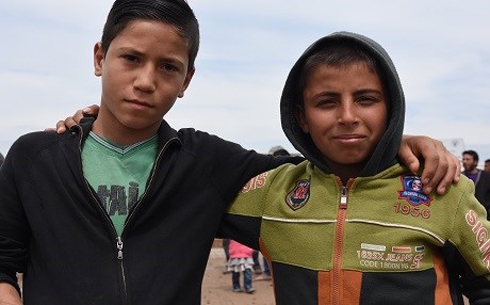
"There are still approximately 1,750,000 crisis-affected Iraqis living in displacement as of February 2019, due to significant obstacles to return. Over 530,000 persons are still living in camps, which require critical support," read an IOM report released on Friday.
IOM is appealing for $41.4 million in "emergency assistance" for 1,744,980 Iraqis. More than 4.2 million Iraqis have returned since the Islamic State (ISIS) conflict began five years ago.
Remaining are "significant obstacles to return such as damage to houses; lack of livelihoods and basic services; perceptions of insecurity in areas of origin; and mental and psychosocial distress."
According to IOM, almost 65 percent of the affected are concentrated in the northern provinces of Nineveh, Anbar, and Saladin.
“We highly appreciate IOM’s efforts to provide life-saving humanitarian assistance to displaced families in and out of camps as well as support them upon return their communities of origin,” said Naseer Abdel-Sattar, the executive director of the Joint Coordination and Monitoring Centre of the Government of Iraq in the statement.
"We look forward to our continued cooperation in 2019," he added.
Tom Peyre-Costa, the spokesperson for the Norwegian Refugee Council (NRC) in Iraq, explained to Rudaw English that there are five main reasons why displacement has continued in Iraq.
Housing destruction and property ownership and restitution is a primary complaint of IDPs. Additionally, many IDPs lack adequate sources of income.
A lack of social cohesion and lingering tensions are also an obstacle to return.
IDPs' perceived insecurity — like the possibility of an Islamic State (ISIS) reoccurrence — or having their returns blocked by security forces are additional hurdles.
Fifth, many IDPs lack required documentation. Because of the speed ISIS swept across Iraq and other factors, the IDPs face the difficult task of negotiating Iraqi and KRG bureaucracy.
"When people have no home to return to and languish in camps it exacerbates tensions between communities and marginalizes a part of the population," Peyre-Costa said.
NRC is calling for the government to take "concrete steps" to compensate IDPs for property losses.
According to authorities in the Kurdistan Region, it continues to host more than 1.5 million persons, including 1,234,891 IDPs and 272,900 refugees primarily from Syria.
“The protracted displacement crisis is one of the critical challenges that needs our focused attention, as many displaced people still depend entirely on the provision of humanitarian assistance. The local resources and capacities are already overstretched and pushed to the limit,” stated Hoshang Mohamed, the director general of the KRG Joint Crisis Coordination Centre (JCC).
"IOM has been one of the key partners to provide life-saving assistance to the displaced people inside and outside the camps. We value the continued support and cooperation with IOM to support the most vulnerable people," he added.
Rudaw