US Supreme Court Ruling on Trump Tariffs Sparks Cautious Optimism and Deep Uncertainty in Europe
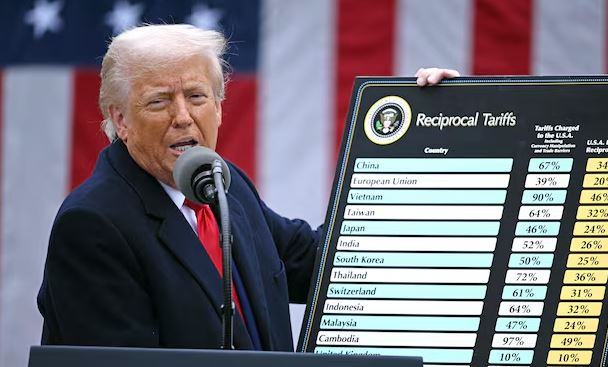
European leaders and business groups have reacted with cautious optimism mixed with significant uncertainty after the Supreme Court of the United States ruled that many of former US President Donald Trump’s tariffs were illegal.
The landmark decision, issued on Friday, targeted tariffs enacted under the International Emergency Economic Powers Act (IEEPA), a statute Trump relied upon for much of his so-called “reciprocal tariffs” policy. While the ruling could temporarily halt a cornerstone of Trump’s trade agenda, the former president has vowed to continue imposing tariffs through alternative legal mechanisms.
In Europe, reactions were measured.
French President Emmanuel Macron welcomed the decision while speaking at an agricultural fair in Paris. “It is good to have power and counterweights to power in democracies,” Macron said, adding that France would carefully assess the implications of Trump’s newly announced 10% global tariff.
The German government stated it was in “close contact” with US authorities to clarify the next steps. Similarly, a spokesperson for the European Commission said the 27-member bloc was seeking further clarification from Washington.
The ruling has cast fresh doubt over the EU-US trade agreement struck last July. The deal fixed tariffs on most EU goods entering the US at 15%, while the EU agreed to eliminate tariffs on US industrial goods.
However, the European Parliament had already paused ratification after Trump’s threats to annex Greenland. Now, a planned vote by the European Parliament’s trade committee—scheduled for February 24—faces uncertainty. Lawmakers are set to hold an emergency meeting to reassess the situation.
Bernd Lange, chair of the trade committee, said on social media that “the era of unlimited, arbitrary tariffs might now be coming to an end,” but stressed the need to carefully evaluate the ruling’s consequences.
Analysts suggest the decision could embolden critics of the agreement within the European Parliament. Carsten Brzeski, Global Head of Macro at ING Research, noted that some lawmakers might feel encouraged to prolong the ratification freeze. However, he warned that the US administration still possesses “a filled toolkit” of alternative tariff instruments that could maintain pressure on trading partners.
US Trade Representative Jamieson Greer said Washington would “honour” trade agreements already struck and expects its partners to do the same. He emphasized that tariffs would remain at agreed levels regardless of the litigation outcome.
Meanwhile, the UK government—first to secure a tariff arrangement following Trump’s earlier tariff blitz—said it expects its “privileged trading position” with the US to continue. A Downing Street spokesperson confirmed London is assessing how the ruling may affect bilateral trade.
German industry groups cautiously welcomed the ruling as a positive signal for rules-based trade.
The Federation of German Industries (BDI) described the decision as reinforcing the global trade order but warned that ongoing uncertainty complicates planning for internationally oriented firms. Wolfgang Niedermark, a BDI executive board member, urged swift clarification of the ruling’s implications for the EU-US deal.
The German Chamber of Industry and Commerce (DIHK) echoed these concerns. Volker Treier, Head of Foreign Trade at DIHK, said the US administration retains other legal instruments to impose restrictive measures, and businesses must prepare accordingly.
Treier emphasized the need for continued EU efforts to reduce tariffs beyond the 15% baseline, particularly the 50% duties on European steel and aluminum.
Importantly, the Supreme Court decision does not affect tariffs enacted under national security provisions, including Section 232 of the Trade Expansion Act of 1962. These include duties on steel, aluminum, and automotive imports. Nor does it impact tariffs imposed under Section 301 of the Trade Act of 1974 on Chinese goods during Trump’s first term.
Following the ruling, Trump announced new global 10% tariffs under Section 122 of the 1974 Trade Act. These are in addition to existing sector-specific levies.
The automotive sector remains particularly vulnerable. European car exports had been subject to a 15% tariff under the July agreement. However, with the deal’s future uncertain, it is unclear whether exporters could face the broader 25% rate set by the Trump administration.
Pharmaceuticals may be next. Although tariffs in that sector have not yet been implemented, Trump has repeatedly threatened substantial levies. If enacted under Section 232, they could significantly impact European manufacturers.
Despite initial optimism, analysts caution against expecting immediate relief.
“Europe should not be mistaken, this ruling will not bring relief,” Brzeski said. He warned that targeted investigations under Sections 301 and 232 could allow Washington to impose more precise and potentially more damaging tariffs on sectors such as pharmaceuticals, chemicals, and automotive components.
“The legal authority may be different,” he said, “but the economic impact could be identical—or worse.”
As European policymakers and businesses assess their options, one conclusion appears clear: while the Supreme Court ruling may have altered the legal landscape, the uncertainty surrounding transatlantic trade relations remains far from resolved.